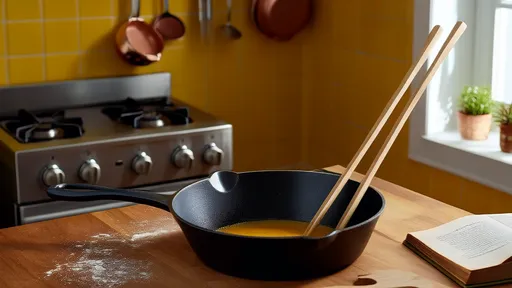
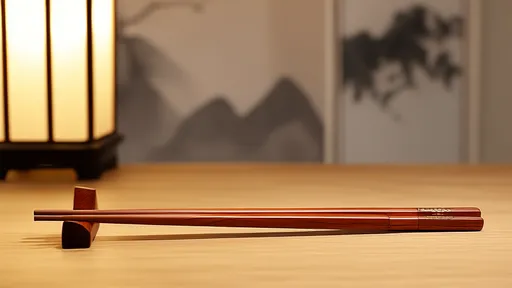
In the quiet hum of a kitchen, a cook stands over a pot of shimmering oil, a single wooden chopstick poised in hand. This simple tool, often overlooked, holds the key to one of cooking's most crucial variables: oil temperature. For generations, chefs and home cooks alike have relied on this unassuming test—observing the behavior of tiny bubbles when a wooden implement meets hot oil—to gauge the readiness of their frying medium. It is a technique born not from laboratory precision, but from accumulated culinary wisdom, a tactile and visual art passed down through kitchens worldwide.
The principle is deceptively simple. As the wooden chopstick is submerged into the heating oil, moisture trapped within its porous structure begins to heat rapidly. This moisture turns to vapor, forcing its way out of the wood and creating a stream of tiny, frantic bubbles. The character, size, and vigor of these bubbles serve as a direct indicator of the oil's thermal energy. It's a live performance of physics, where water’s boiling point and the transfer of heat play out in a miniature spectacle. A slow, lazy stream of large bubbles suggests the oil is merely warm, perhaps only around 250-300°F (120-150°C), suitable for gentle poaching or reheating but not for creating a crisp seal. However, when the oil reaches the sweet spot for most frying applications—typically between 350-375°F (175-190°C)—the reaction changes dramatically. The bubbles become smaller, more numerous, and energetic, rising quickly and steadily from the entire submerged surface of the wood. This is the signal countless cooks wait for: the oil is ready.
This method's beauty lies in its accessibility. Not every kitchen is equipped with a deep-fry or candy thermometer. These tools, while accurate, can be cumbersome, require calibration, and need careful cleaning. The wooden chopstick, or even a wooden spoon handle, is ubiquitous, disposable, and instantly available. It democratizes the process of frying, making it approachable for a novice cook without specialized gear. There's an intuitive understanding that develops over time; a cook learns to listen to the oil as much as look at it. The sound of the bubbling changes from a low, intermittent gurgle at lower temperatures to a constant, fierce sizzle at the ideal frying range. This multi-sensory check—seeing the tiny, vigorous bubbles and hearing the active sizzle—creates a more holistic and reliable assessment than relying on a single digital readout.
But why is temperature so paramount? Frying is not merely submerging food in hot fat; it is a race against time and water. When food is introduced to oil that is too cool, the reaction is slow. The oil penetrates the food's surface instead of instantly sealing it, resulting in a greasy, soggy, and oil-logged product. It’s a culinary disappointment. Conversely, oil that is too hot is equally problematic. The exterior of the food will burn and turn bitter long before the interior has had a chance to cook through. This leads to an unpleasant contrast of a charred outside and a raw inside. The goal is a temperature high enough to cause the water on the food's surface to vaporize instantaneously, creating a barrier that prevents oil absorption while allowing conductive heat to cook the inside evenly. This perfect Maillard reaction and caramelization create the coveted golden-brown, shatteringly crisp crust that defines excellently fried food. The tiny bubbles from the chopstick are the harbinger of this perfect storm of heat and chemistry.
The type of wood matters, albeit subtly. Most inexpensive chopsticks are made from bamboo, a grass with a relatively consistent and porous structure. Birchwood skewers or the handle of a maple spoon would behave similarly. Denser woods might take a moment longer to show the reaction, while very dry, old wood might produce fewer bubbles. The key is consistency; once a cook learns the behavior of their specific wooden tool, they can depend on it repeatedly. It’s also a test that can be performed continuously. As food is added to the oil, the temperature drops. A quick check with the chopstick after a batch can tell you if the oil has recovered to the proper temperature for the next round, something a stationary thermometer might not communicate as instantly if it's not placed perfectly.
Of course, this traditional method exists within a margin of error. It doesn't provide a precise Fahrenheit or Celsius number. It confirms a range. For recipes demanding exact temperatures, like tempering chocolate or making specific candy syrups, a calibrated thermometer is non-negotiable. But for the vast majority of frying tasks—making french fries, fried chicken, tempura, doughnuts, or fritters—this range is perfectly adequate. It is the difference between a technical measurement and a practical application. Professional chefs, who have thermometers at their disposal, will often still perform this visual test as a quick double-check, a testament to its ingrained reliability.
Ultimately, the wooden chopstick test is a wonderful example of culinary intuition triumphing over complex instrumentation. It connects the cook directly to the cooking process, fostering an attentive relationship with the ingredients and the elements. In an age of smart ovens and digital probes, this humble technique remains a powerful and immediate tool. It represents a fundamental truth in cooking: sometimes the most advanced technology is the one that has been refined by human experience over centuries. So the next time you heat oil, skip the frantic search for a thermometer. Reach for a wooden chopstick, watch for those eager, tiny bubbles, and listen. The oil will tell you everything you need to know.
By /Aug 20, 2025
By /Aug 20, 2025
By /Aug 20, 2025
By /Aug 20, 2025
By /Aug 20, 2025
By /Aug 20, 2025
By /Aug 20, 2025
By /Aug 20, 2025
By /Aug 20, 2025
By /Aug 20, 2025
By /Aug 20, 2025
By /Aug 20, 2025
By /Aug 20, 2025
By /Aug 20, 2025
By /Aug 20, 2025
By /Aug 20, 2025
By /Aug 20, 2025
By /Aug 20, 2025
By /Aug 20, 2025
By /Aug 20, 2025
