In kitchens across continents, the art of steaming fish remains one of the most revered yet intimidating culinary techniques. Home cooks and professional chefs alike have long sought a reliable, scientific approach to achieve that elusive perfection—flaky, moist flesh that separates cleanly from the bone, infused with delicate aromatics without being overcooked into a dry, rubbery disappointment. For years, this mastery seemed reserved for those with decades of experience, an intuitive sense of timing, and perhaps a bit of luck. That is, until a remarkably simple yet transformative guideline emerged from culinary science: the one-centimeter, five-minute rule. This principle has demystified the process, turning guesswork into precision and anxiety into confidence.
The genesis of this rule isn't attributed to a single celebrity chef or a high-tech food lab, but rather to the collective wisdom of culinary science that understands heat transfer and protein denaturation. Fish muscle, primarily composed of delicate proteins and a high moisture content, reacts predictably to steam’s consistent and gentle heat. Unlike boiling or frying, steaming surrounds the food with vapor at just over 100°C (212°F), cooking it evenly without agitating its fragile structure. The key variable became thickness. A thin fillet might be done in moments, while a thick steak could take considerably longer, but the relationship is linear. Through extensive testing, a clear pattern was confirmed: for every centimeter of thickness measured at the fish's thickest part, five minutes of steaming produces ideal results. This isn't just a random tip; it's applied food physics.
Adopting this rule requires a shift in mindset. The first and most critical step is to stop thinking about the weight of the fish and start thinking about its geometry. A long, slender fish weighing 500 grams could be far thinner than a compact, round fish of the same weight. The rule’s accuracy hinges entirely on the single greatest distance from the outside to the center of the flesh. This is why a reliable kitchen ruler or a set of calipers becomes a more valuable tool than a scale. Place the fish on its side and measure it at its plumpest point, whether that's the center of a whole fish's body or the thickest part of a fillet. This measurement is your gospel; everything else follows.
Of course, a formula is useless without proper context. The five-minute-per-centimeter guideline is the core, but several nuanced factors can nudge the timing slightly. The starting temperature of the fish is paramount. A fish taken straight from the refrigerator, its core temperature near 4°C (39°F), will require the full calculated time. If the fish is closer to room temperature, you might shave a minute off the total. The intensity of your steamer also plays a role. A powerful, commercial-grade steamer that rapidly fills the cavity with roaring vapor might be marginally more efficient than a gentle home setup. The rule is calibrated for a vigorous, steady steam. Furthermore, if you are steaming a whole fish stuffed with aromatics like ginger and scallions, this adds minimal insulation, but for a very dense stuffing, a minute or two of extra time might be prudent. The rule provides the flawless foundation; these are the fine-tuning adjustments for the virtuoso.
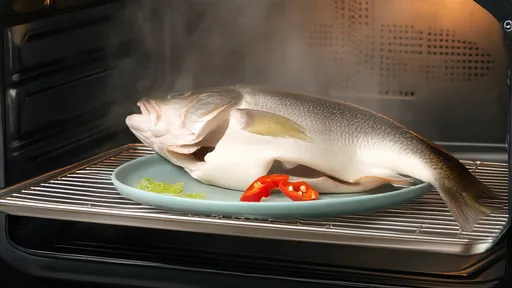
How does one know for sure? The timer is your primary guide, but the classic test for doneness remains invaluable. At the end of the calculated steaming time, carefully insert a fork or a skewer into the thickest part of the fish and twist gently. The flesh should offer no resistance, flaking apart easily and appearing opaque all the way through. If there is any translucency or a gelatinous texture, it needs more time. For whole fish, another sign is that the eyes will have turned completely white and popped out slightly. Remember, carryover cooking—where the residual heat continues to cook the fish after it's removed from the steamer—is minimal with steaming, so it's better to achieve perfect doneness *on* the heat rather than relying on resting.
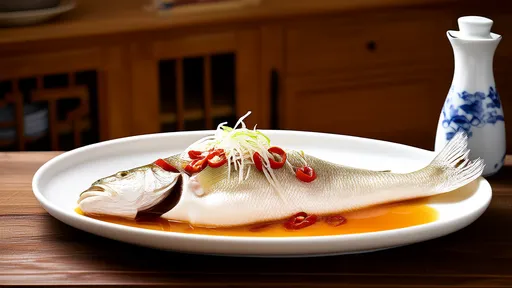
The beauty of this formula is its universal application. It liberates the cook from being chained to specific recipes for specific fish. Whether you are preparing a delicate sole fillet, a meaty salmon steak, a whole Mediterranean sea bass, or a robust cod loin, the principle remains constant. A two-centimeter-thick salmon fillet steams for ten minutes. A four-centimeter-thick whole snapper steams for twenty. This empowers culinary creativity. You can confidently steam whatever looks freshest at the market, applying classic Cantonese seasonings with ginger and soy, a Mediterranean garnish of lemon and herbs, or a Southeast Asian paste of chili and lemongrass, all secure in the knowledge that your cooking time is mathematically sound.
This simple rule has had a profound impact, effectively democratizing a technique once shrouded in mystery. It empowers novice cooks to attempt dishes they would have previously considered restaurant-only fare. It provides a reliable baseline for professionals to ensure consistency during busy service. It shifts the focus from anxious clock-watching to the more enjoyable aspects of cooking: selecting the freshest ingredients, crafting flavorful sauces, and artfully plating the final dish. The fear of ruining an expensive piece of fish dissolves, replaced by the quiet confidence that comes from understanding the science behind the art. The steam rises, the timer is set, and perfection is, quite literally, calculated.
Ultimately, the one-centimeter, five-minute rule is more than a kitchen hack; it is a testament to how a little scientific understanding can profoundly elevate an ancient culinary art. It bridges the gap between intuition and instruction, between the esoteric knowledge of masters and the achievable goals of everyday enthusiasts. By respecting the principles of heat and protein, this guideline guarantees that the natural, delicate flavor and texture of the fish are preserved and highlighted, which is, after all, the entire purpose of steaming. So, arm yourself with a ruler, trust in the steam, and prepare to serve flawlessly cooked fish, time after time.

By /Aug 20, 2025
By /Aug 20, 2025

By /Aug 20, 2025

By /Aug 20, 2025
By /Aug 20, 2025

By /Aug 20, 2025
By /Aug 20, 2025
By /Aug 20, 2025
By /Aug 20, 2025

By /Aug 20, 2025

By /Aug 20, 2025

By /Aug 20, 2025

By /Aug 20, 2025
By /Aug 20, 2025
By /Aug 20, 2025
By /Aug 20, 2025
By /Aug 20, 2025

By /Aug 20, 2025
By /Aug 20, 2025
By /Aug 20, 2025
