Symptom Control and Comfort Care in Palliative Care

Oct 14, 2025 By

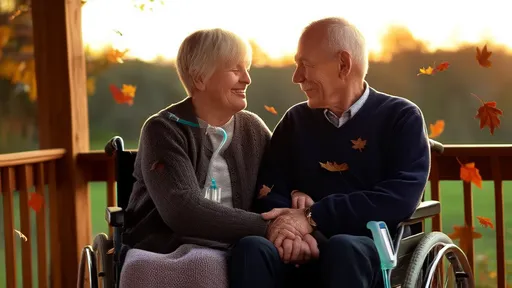
In the quiet corridors of palliative care units, a profound transformation occurs daily—not in the eradication of disease, but in the meticulous art of symptom management and comfort care. This specialized approach to medicine represents a fundamental shift from curative treatments to holistic support, where the quality of life becomes the central focus. The philosophy underpinning this care model recognizes that even when a cure is no longer possible, there remains an immense capacity for healing—healing defined not by laboratory results but by human dignity, comfort, and peace.


The journey begins with comprehensive symptom assessment, a process requiring both clinical expertise and profound human connection. Healthcare professionals in palliative care develop an almost intuitive understanding of their patients' needs, recognizing that unexpressed pain often speaks through subtle cues—a tightened jaw, restless movement, or withdrawal from interaction. This nuanced observation forms the foundation of effective symptom control, where the goal extends beyond mere numerical pain scales to the restoration of personal autonomy. Patients are encouraged to articulate their experiences in their own terms, creating a collaborative partnership in care that honors their unique perspectives and preferences.


Pain management constitutes the cornerstone of palliative symptom control, yet it represents one of the most complex challenges in medical practice. The subjective nature of pain demands individualized approaches that consider not only physical sensations but emotional and spiritual dimensions as well. Modern palliative care has moved beyond the traditional fear of opioid medications, embracing balanced protocols that prioritize patient comfort while minimizing side effects. The sophisticated use of adjuvant medications—including antidepressants, anticonvulsants, and local anesthetics—has revolutionized pain control, allowing for targeted relief of neuropathic and bone pain that often proves resistant to conventional analgesics.


Beyond pharmacological interventions, integrative therapies have gained significant recognition for their role in comprehensive pain management. Techniques such as therapeutic massage, acupuncture, and mindfulness meditation work in concert with traditional medicine to address the multifaceted experience of suffering. These modalities recognize that pain exists within a context of personal history, cultural beliefs, and emotional states, requiring approaches that engage the whole person rather than isolated symptoms. The evidence supporting these complementary therapies continues to grow, demonstrating their capacity to reduce medication requirements while enhancing overall well-being.


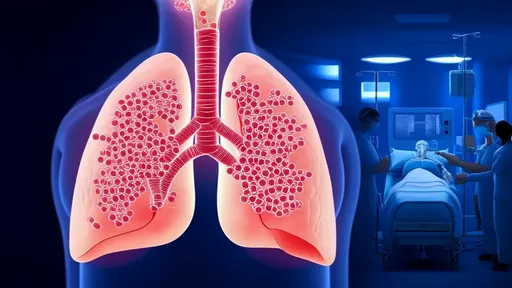
Respiratory symptoms present particularly distressing challenges for patients with advanced illness, with dyspnea—the subjective experience of breathlessness—ranking among the most frightening sensations a person can endure. The palliative approach to respiratory distress combines pharmacological management with environmental and psychological support. Opioids, carefully titrated to individual need, can remarkably reduce the sensation of air hunger without suppressing respiratory drive to dangerous levels. Meanwhile, simple interventions like positioning, fan therapy, and breathing techniques empower patients to regain a sense of control over their breathing, transforming panic into manageable rhythm.


The management of nausea and vomiting requires similar sophistication, as these symptoms may stem from multiple causes including metabolic disturbances, medication side effects, gastrointestinal obstruction, or increased intracranial pressure. Palliative specialists employ a systematic approach to identify the underlying mechanisms, selecting antiemetic medications that target specific neurotransmitter pathways. The strategic combination of drugs working through different mechanisms often proves more effective than single-agent therapy, reflecting the complex neurophysiology of nausea. Additionally, non-pharmacological approaches such as aromatherapy, acupressure, and dietary modifications provide valuable adjuncts to medical treatment.


Perhaps the most overlooked aspect of symptom management involves addressing fatigue and weakness, which profoundly impact quality of life yet often receive less attention than more dramatic symptoms. The palliative approach to fatigue recognizes it as a multidimensional phenomenon involving physical, psychological, and spiritual dimensions. Energy conservation techniques, strategic rest periods, and gentle mobilization exercises help patients preserve function while accepting necessary limitations. This balanced approach avoids both the frustration of unrealistic expectations and the resignation of complete inactivity, instead helping patients find meaningful engagement within their changing capacities.


Comfort care extends far beyond symptom control to embrace the environmental, psychological, and spiritual dimensions of the human experience. The physical environment plays a crucial role in patient well-being, with attention to lighting, noise control, temperature, and personal space creating a sanctuary for healing. Family photographs, favorite music, and cherished objects transform clinical spaces into personal territories, reinforcing identity and continuity amid the disruptions of illness. These seemingly small details carry profound significance, serving as anchors to normalcy and sources of comfort when medical interventions reach their limits.


Skin care and hygiene represent fundamental components of comfort that transcend mere cleanliness to become expressions of human dignity. Meticulous attention to pressure ulcer prevention, oral care, and personal grooming communicates respect for the individual beyond their medical condition. The simple act of washing becomes an opportunity for human connection and gentle touch, providing comfort that words cannot express. Specially trained palliative care nurses develop expertise in managing complex wounds and skin conditions, using advanced dressings and positioning techniques to prevent and treat breakdown while maximizing patient comfort.


Nutritional support in palliative care requires careful consideration of competing priorities—the symbolic importance of food, the pleasure of eating, and the practical realities of declining intake. Rather than aggressively pursuing artificial nutrition in advanced illness, palliative teams help patients and families navigate the emotional landscape of changing eating patterns. The focus shifts from nutritional targets to the experience of eating itself, emphasizing comfort, pleasure, and social connection. Small, appealing meals, attention to food preferences, and creative adaptations to swallowing difficulties honor the role of food in human relationships while respecting the body's natural progression.


Psychological and emotional support forms the invisible architecture of comfort care, addressing the fear, anxiety, and depression that often accompany serious illness. Specially trained social workers and psychologists provide therapeutic support using modalities adapted to the unique needs of palliative patients. Life review techniques help individuals find meaning and coherence in their personal narratives, while cognitive-behavioral approaches address specific fears about death and dying. The creation of legacy projects—whether through recorded messages, written materials, or artistic expressions—allows patients to continue their presence in the lives of loved ones, addressing the fundamental human need for continuity beyond physical existence.


Spiritual care, provided by professional chaplains or spiritual care providers, attends to questions of meaning, purpose, and transcendence that arise with particular intensity at life's end. This dimension of care remains fully inclusive, serving patients of all religious traditions and those with no formal spiritual affiliation. Through deep listening and presence, spiritual caregivers help individuals explore their understanding of life's ultimate concerns, finding peace with unfinished business and reconciling relationships. Rituals, prayers, or simple ceremonies often provide structure for expressing what words cannot capture, creating containers for profound emotional and spiritual experiences.


Family support represents an essential extension of comfort care, recognizing that serious illness affects entire networks of relationships. Palliative teams provide education, emotional support, and practical assistance to family caregivers, who often navigate complex medical landscapes while managing their own grief and exhaustion. Respite care, counseling, and support groups help sustain caregivers through the prolonged journey of illness, recognizing that their well-being directly impacts patient comfort. When death approaches, families receive guidance about what to expect and how to provide comfort, transforming fear into meaningful participation in their loved one's final moments.


The final days and hours of life demand particularly specialized comfort measures, with attention turning exclusively to peaceful transition. Symptom management intensifies to ensure freedom from distress, while unnecessary monitoring and interventions are discontinued to preserve the dignity of the natural dying process. Environmental modifications—soft lighting, familiar voices, gentle touch—create an atmosphere of sacred peace. The expertise of palliative teams shines most brightly in these moments, as they guide families through the mysterious territory of active dying, normalizing the process while honoring its profound significance.


In reflecting on the comprehensive nature of symptom management and comfort care, we recognize that this approach represents medicine at its most humanistic. The sophisticated integration of pharmacological science, psychological insight, and basic human compassion creates a tapestry of support that honors the whole person. Rather than representing medical failure, palliative care demonstrates healthcare's capacity to accompany patients through life's most challenging transition with expertise, respect, and profound compassion. The true measure of this care emerges not in prolonged survival, but in the quality of moments—the comfort of a pain-free hour, the peace of reconciled relationships, the dignity of maintained personal control, and the profound connection between caregiver and patient that transcends the boundaries of life itself.


Recommend Posts
Health

Hypertension Favors These Eight Groups of People, Are You Among Them?

By /Oct 14, 2025

Have you ever wondered why some people develop high blood pressure while others with similar lifestyles remain unaffected? The answer lies in the complex interplay between genetics, lifestyle choices, and environmental factors that make certain individuals more susceptible to this silent condition. Understanding these risk factors isn't about assigning blame but about empowering ourselves with knowledge to take preventive measures.
Health

A New Era of Planetary Health Management Driven by Data

By Daniel Scott/Oct 14, 2025

As dawn breaks over the sprawling metropolis of Singapore, thousands of data points begin streaming into the city's central operations center. From air quality sensors monitoring pollution levels to smart water meters tracking consumption patterns, from hospital emergency rooms reporting real-time health incidents to public transportation systems mapping commuter flows - this city breathes data. What emerges is not merely an urban management system, but a living, breathing digital organism that represents humanity's most ambitious attempt yet to manage planetary health through data intelligence.
Health

Exploring the Payment Mechanism for Palliative Care

By /Oct 14, 2025

In the quiet corridors of healthcare facilities worldwide, a profound financial transformation is taking place that mirrors the equally profound human transitions occurring within patient rooms. The exploration of payment mechanisms for palliative care represents not merely an administrative exercise but a fundamental rethinking of how societies value comfort, dignity, and quality of life during life's final chapter.
Health

Peace and Health: Lifelines in Conflict Zones

By Thomas Roberts/Oct 14, 2025

In the shadow of falling shells and the echo of distant gunfire, a different kind of battle is waged daily. It is not fought for territory or political ideology, but for the most fundamental human right: the right to health and life itself. In conflict zones across the globe, from the arid plains of sub-Saharan Africa to the besieged cities of the Middle East and Eastern Europe, healthcare represents the final, fraying thread of civilization. It is a fragile lifeline, perpetually at risk of being severed by violence, politics, and sheer neglect, yet held taut by the unwavering courage of medical personnel and humanitarian workers.
Health

Oxygen Therapy Misconception: High Concentration Does Not Equal High Efficiency

By /Oct 14, 2025

In the intricate dance of medical interventions, oxygen therapy stands as one of the most fundamental and life-sustaining. Yet, a pervasive and potentially dangerous myth persists within both public consciousness and, at times, clinical practice: the belief that a higher concentration of delivered oxygen invariably translates to a more effective and beneficial treatment. This oversimplification, while born from a place of wanting to provide the utmost care, ignores the delicate physiological balance our bodies maintain and can, in fact, lead to significant harm. The administration of oxygen is not a blunt instrument but a precision tool, one that requires a deep understanding of respiratory physiology to wield correctly.
Health

Africa's Vigilance and Action in Public Health Emergency Response

By /Oct 14, 2025

The African continent, often depicted in global media through a lens of challenges, has in recent years demonstrated remarkable resilience and strategic foresight in the realm of public health emergency response. Faced with a history of infectious disease outbreaks, from Ebola to cholera, and the more recent COVID-19 pandemic, African nations have been compelled to develop and refine systems that not only react to crises but also proactively work to prevent them. This journey is not merely about survival; it is about building a sustainable framework for health security that respects the unique socio-economic and cultural landscapes of the continent. The narrative is shifting from one of vulnerability to one of vigilant action, where lessons from the past are forging a more prepared future.
Health

Science and Humanity in Global Health Governance

By Amanda Phillips/Oct 14, 2025

In the dimly lit corridors of global health governance, a quiet revolution is unfolding. It is a revolution that pits the cold precision of silicon against the warm unpredictability of human spirit, where algorithms meet empathy in a delicate dance that will define the future of human wellbeing. As we stand at this crossroads, the fundamental question emerges: can technology and humanity not merely coexist but synergize to create a more equitable global health landscape?
Health

Echoes in the Silence: The Unseen Wounds of War and the Journey Toward Healing

By Thomas Roberts/Oct 14, 2025

The thunder of artillery fades, the dust settles, and the world declares peace. But for those who have endured the crucible of combat, a different, more insidious war often begins. It is a war waged not on foreign soil, but within the labyrinth of the human mind. The psychological impact of armed conflict leaves scars that are invisible to the naked eye yet can be more debilitating than any physical injury. The term "shell shock" from the trenches of World War I has evolved through "combat fatigue" to the modern clinical understanding of Post-Traumatic Stress Disorder (PTSD), but the core agony remains the same: the human psyche is not built to process the extreme horrors of warfare. This is a profound and universal human challenge, one that transcends borders, cultures, and the specifics of any single conflict.
Health

Stay Alert to Health Risks from Sudden Temperature Drops During Cold Dew

By /Oct 14, 2025

The crisp autumn air takes on a sharper edge as the Cold Dew solar term settles in, a period in the traditional East Asian lunisolar calendar that typically begins around October 8th. This is not merely a poetic turning of the seasons; it is a physiological threshold. The name itself, "Cold Dew," hints at the transformation—morning dew begins to condense into cold droplets, a precursor to the frost that will soon follow. For the human body, this shift is far from superficial. It represents a significant environmental stressor, demanding a recalibration of our internal thermostats and a heightened state of awareness regarding our health. The gradual, gentle cooling of the early autumn gives way to more abrupt and significant temperature plunges, particularly overnight and in the early mornings. These sudden drops are the true health challenge of Cold Dew, catching many unprepared and triggering a cascade of potential health risks that extend well beyond the common cold.
Health

Adopting Seasonal Health Practices for a Peaceful Autumn

By /Oct 14, 2025

The golden leaves begin their graceful descent, carrying with them the whispered secrets of seasonal transition. As summer's vibrant energy gradually yields to autumn's contemplative stillness, our bodies and minds embark on their own journey of transformation. This ancient dance between human physiology and nature's rhythms forms the foundation of traditional wisdom that has guided countless generations toward harmonious living.
Health

The Wisdom of Breathing": Scientific Understanding of Oxygen Therapy

By /Oct 14, 2025

In the quiet rhythm of our existence, breathing remains the most fundamental yet overlooked act of life. The air we draw into our lungs carries oxygen—the invisible fuel that powers every cell in our bodies. For centuries, humanity has understood the vital importance of breath, but only in recent decades have we begun to truly master its therapeutic potential through the science of oxygen therapy.
Health

From Global Summits to Seasonal Health Practices

By Megan Clark/Oct 14, 2025

As world leaders gather in Geneva for the annual Global Summit on Sustainable Development, an unexpected conversation emerges between delegates during coffee breaks - not about carbon credits or trade agreements, but about seasonal wellness practices from their respective cultures. This seemingly trivial exchange reveals a profound connection between global environmental consciousness and personal health awareness that transcends geopolitical boundaries.
Health

Symptom Control and Comfort Care in Palliative Care

By /Oct 14, 2025

In the quiet corridors of palliative care units, a profound transformation occurs daily—not in the eradication of disease, but in the meticulous art of symptom management and comfort care. This specialized approach to medicine represents a fundamental shift from curative treatments to holistic support, where the quality of life becomes the central focus. The philosophy underpinning this care model recognizes that even when a cure is no longer possible, there remains an immense capacity for healing—healing defined not by laboratory results but by human dignity, comfort, and peace.
Health

TCM Health Preservation: Identifying Constitution, Choosing Methods

By /Oct 14, 2025

In the vast landscape of traditional Chinese medicine, the concept of constitutional typing stands as a cornerstone of preventive healthcare. Rather than treating diseases after they manifest, TCM emphasizes understanding an individual's inherent physical and psychological makeup to maintain balance and prevent illness. This ancient wisdom, refined over thousands of years, offers a personalized approach to wellness that resonates profoundly in our modern era of generic health advice.
Health

Children in Conflict: Challenges of Nutrition and Survival

By /Oct 14, 2025

In the shadow of falling shells and amidst the rubble of shattered cities, a silent emergency unfolds—one that claims young lives not through direct violence, but through the slow, cruel mechanisms of hunger and malnutrition. The plight of children trapped in conflict zones represents one of the most severe humanitarian challenges of our time. Their survival hinges not just on immediate safety from bullets and bombs, but on the fundamental, daily access to adequate nutrition, a necessity that war systematically dismantles.
Health

Understanding Monkeypox: Symptoms, Transmission, and Prevention

By John Smith/Oct 14, 2025

Monkeypox has recently captured global attention as cases emerge in various parts of the world. This viral disease, while not entirely new, has sparked concerns due to its potential for human-to-human transmission and the unfamiliarity many have with its characteristics. Understanding the nature of monkeypox, its symptoms, how it spreads, and the measures we can take to protect ourselves is crucial in navigating this public health challenge.
Health

Addressing Health Responsibilities in a Fragmented World

By Ryan Martin/Oct 14, 2025

In an increasingly fragmented global landscape, the concept of health responsibility has taken on new dimensions and urgency. The world finds itself grappling with polarized political ideologies, economic disparities, and competing national interests that create significant barriers to collective health governance. This fragmentation challenges the very foundations of global health security and demands innovative approaches to health responsibility that transcend traditional boundaries.
Health

A Dialogue at the End of Life: Dignity, Love, and Farewell

By Benjamin Evans/Oct 14, 2025

In the grand narrative of health and wellness, we dedicate immense energy to the pursuit of a long, vibrant life. We optimize our nutrition, commit to physical activity, and screen for diseases in the hope of adding years to our lives. Yet, there is a profound, often neglected chapter in this story: the chapter of how we choose to end it. The conversation surrounding death and dying remains one of our greatest taboos, a silent space filled with discomfort and fear. However, it is within this very conversation that we find the potential for our most profound acts of love, dignity, and peace.
Health

Control Weight and Stabilize Blood Pressure

By /Oct 14, 2025

Walking through the grocery store, Mark paused in front of the salt display, his cart already filled with colorful vegetables and lean proteins. At fifty-eight, his recent doctor's appointment had delivered a sobering message: his blood pressure had crept into dangerous territory, and his weight had become a significant health concern. Like millions of adults worldwide, Mark faced the interconnected challenges of weight management and blood pressure control—a dual battle that requires understanding their intricate relationship.
Health

Portable Oxygen Therapy: Balancing Freedom and Risk

By /Oct 14, 2025

The emergence of portable oxygen concentrators has revolutionized respiratory care, offering patients unprecedented mobility while raising complex questions about safety and appropriate usage. These compact devices have transformed oxygen therapy from a stationary treatment to an active companion, enabling individuals with chronic respiratory conditions to reclaim aspects of their lives that were previously limited by traditional oxygen tanks. The psychological impact of this newfound freedom cannot be overstated—patients report improved mental health, social engagement, and overall quality of life when they can maintain their daily routines without being tethered to heavy equipment.